
Interview: Interoperability as a Foundation for Sustainable Energy Platforms
30 March 2026
Dragomir Stanchev, CEO of LEAD Consult, reflects on long-term collaboration, system responsibility, and what enables complex energy platforms such as BelVis⁺ to remain reliable and adaptable within interconnected IT landscapes developed by KISTERS AG.
Mr. Stanchev, LEAD and KISTERS have been working together for several years. How would you describe the nature of this collaboration?
LEAD and Kisters have known each other for well over a decade now. Both our companies share a passion for technology and innovation. Throughout the years, LEAD has augmented and supported Kisters in integrating marketplaces, exchanges, and other third-party providers into their core solutions and for their customers. Our profound experience integrating more than 50 providers, systems, and vendors, combined with deep technological know-how, helped both companies work seamlessly together.
Why do sustained partnerships matter in complex energy IT landscapes?
Our vision in LEAD has always been to build long-term, sustainable partnerships with like-minded companies. We build upon common values and beliefs that we share, and use the passion for energy and technology to grow together. But even more important is the trust and mutual understanding that we have with our partners. This is exactly the collaboration model that we have with Kisters.
Why is this partnership beneficial for both companies?
For Kisters, this partnership is beneficial as it provides them with cost-efficient technology experts who have deep knowledge and passion for energy. For LEAD this is important as we work with one of the very well-established brands in Germany, that is recognized and used extensively. Their success and adoption are our success.
What role do technology and innovation play in the integration, modernization, and implementation of Belvis⁺?
As with all new or upgraded systems nowadays, technology and its understanding are vital for the success of a product. Deep knowledge of not only cloud technologies, web services, and enterprise patterns, but of newly released, and game-changing tools that increase productivity tremendously is essential. LEAD brings such spearheaded experience to the table, constantly being the frontrunner in using innovation in their work.
Integration and connectivity with vendors, marketplaces, providers, etc., are often discussed as technical topics. Why has it become more central over the years?
Energy companies rely on many specialized systems working together. If those connections are fragile, the reliability of the entire setup is called into question. Over time, integration becomes less about technical elegance and more about whether the organization can rely on its systems under daily and exceptional conditions.
As it is well known in the market, LEAD is the de facto leader in integrating vendors, market exchanges, OTC Platforms, systems, and vendors. A decentralized, diverse ecosystem of products is the reality, and customers rely on vendors to leverage the complex myriad of systems.
BelVis⁺ is often a central platform within such environments. What are some important factors that make such platforms easier to integrate and manage?
A central platform carries responsibility. It has to interact reliably with many surrounding systems and remain predictable even as the environment changes. What matters most is not constant expansion, but consistency. Interfaces should behave as expected, data flows must remain understandable, and changes should be introduced in a controlled way. When these conditions are met, a platform like BelVis⁺ can evolve without creating instability elsewhere in the landscape.
Many organizations are modernizing their systems gradually. What guiding principles are usually followed?
Modernization works best when it is treated as a continuous process rather than a single transformation event. In operationally sensitive environments, systems must remain available as they evolve. A structured approach allows change to happen in manageable steps. Interfaces remain stable, responsibilities are clearly defined, and new components can be introduced without destabilizing existing processes. This reduces the risk typically associated with large-scale system changes.
What role does automation play in maintaining reliability as systems evolve?
Automation introduces consistency at scale and reduces reliance on manual steps, which are difficult to control as volume and complexity grow. Equally important, automation makes system behavior more transparent. When processes are defined and monitored properly, it becomes easier to understand what happened and why. In volatile market environments, that clarity is critical for maintaining confidence in system outcomes.
Looking ahead, what distinguishes energy platforms that remain sustainable over time?
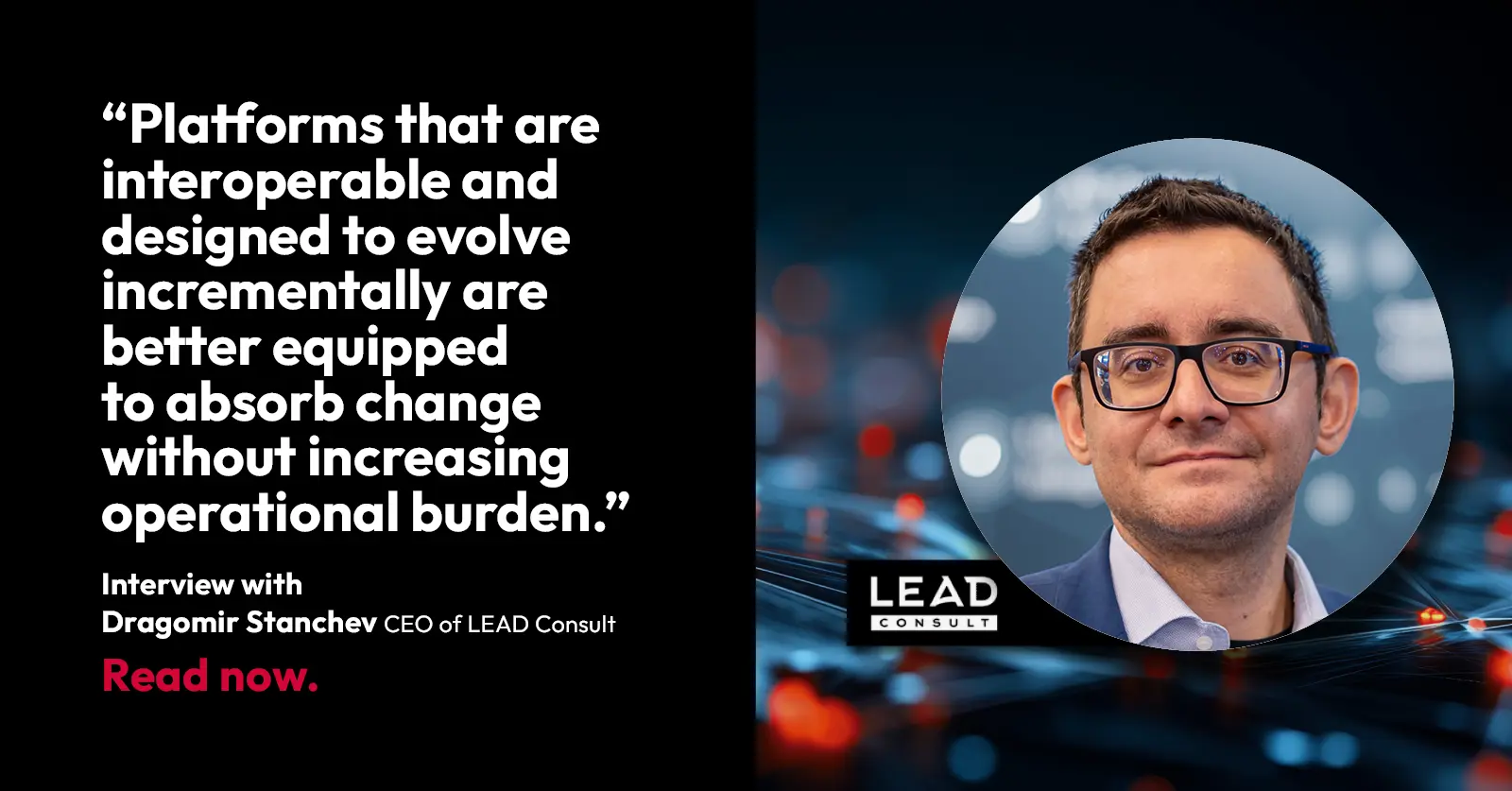
Sustainable platforms are designed with change in mind. Market mechanisms, regulatory requirements, and data volumes will continue to evolve. Platforms that are interoperable and designed to evolve incrementally are better equipped to absorb change without increasing operational burden. From a leadership perspective, the ability to balance evolution with stability is what ultimately determines whether a platform remains viable over the long term.